Biography
René Lacroix
French painter, born in Nice on 14 January 1948, died in Draguignan on 12 April 2011.
- Born
- 14 January 1948, Nice
- Died
- 12 April 2011, Draguignan, Var
- Training
- Architect
- Medium
- Glycerol paint on canvas, pen and Chinese ink on paper
- Style
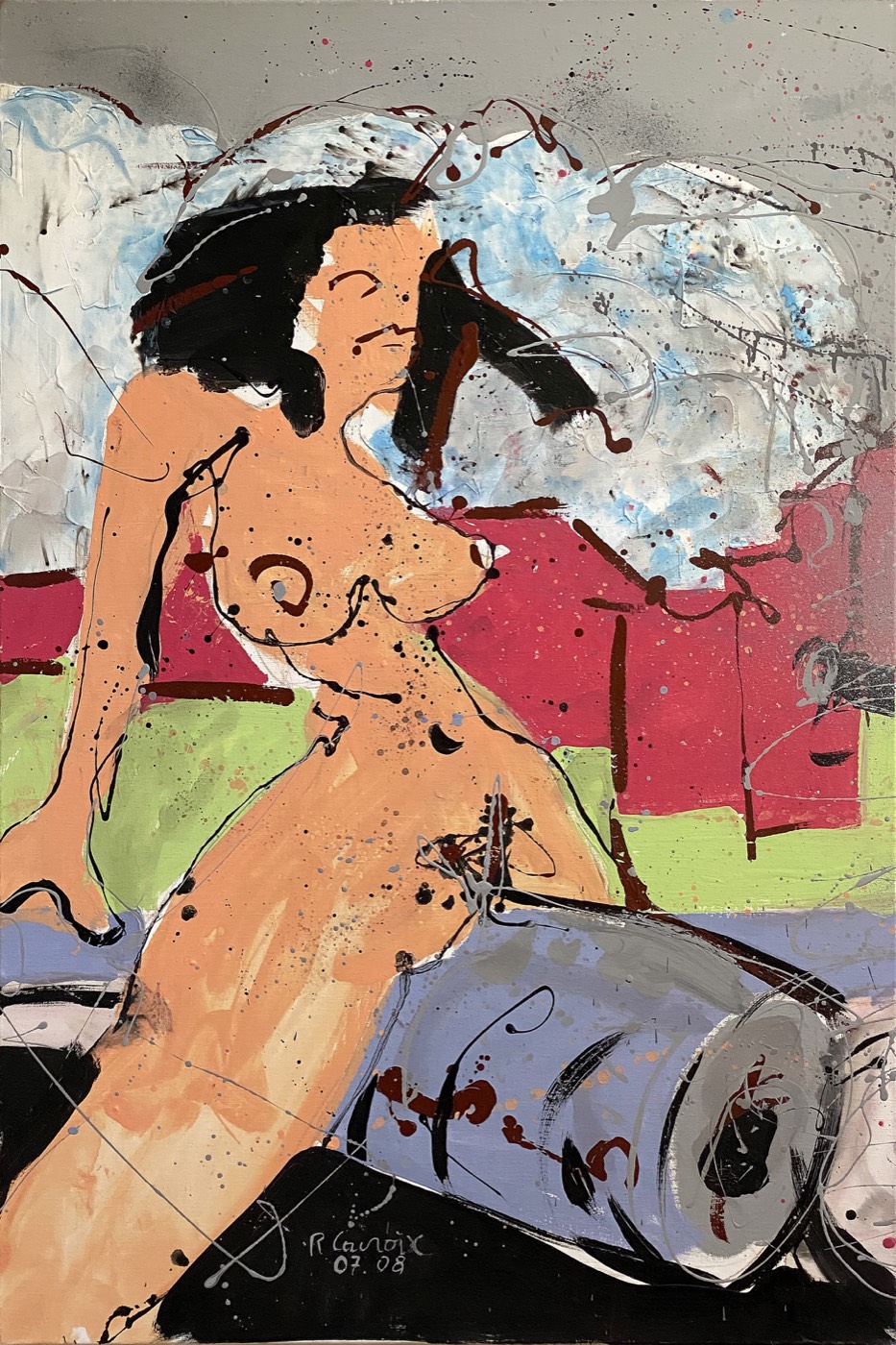
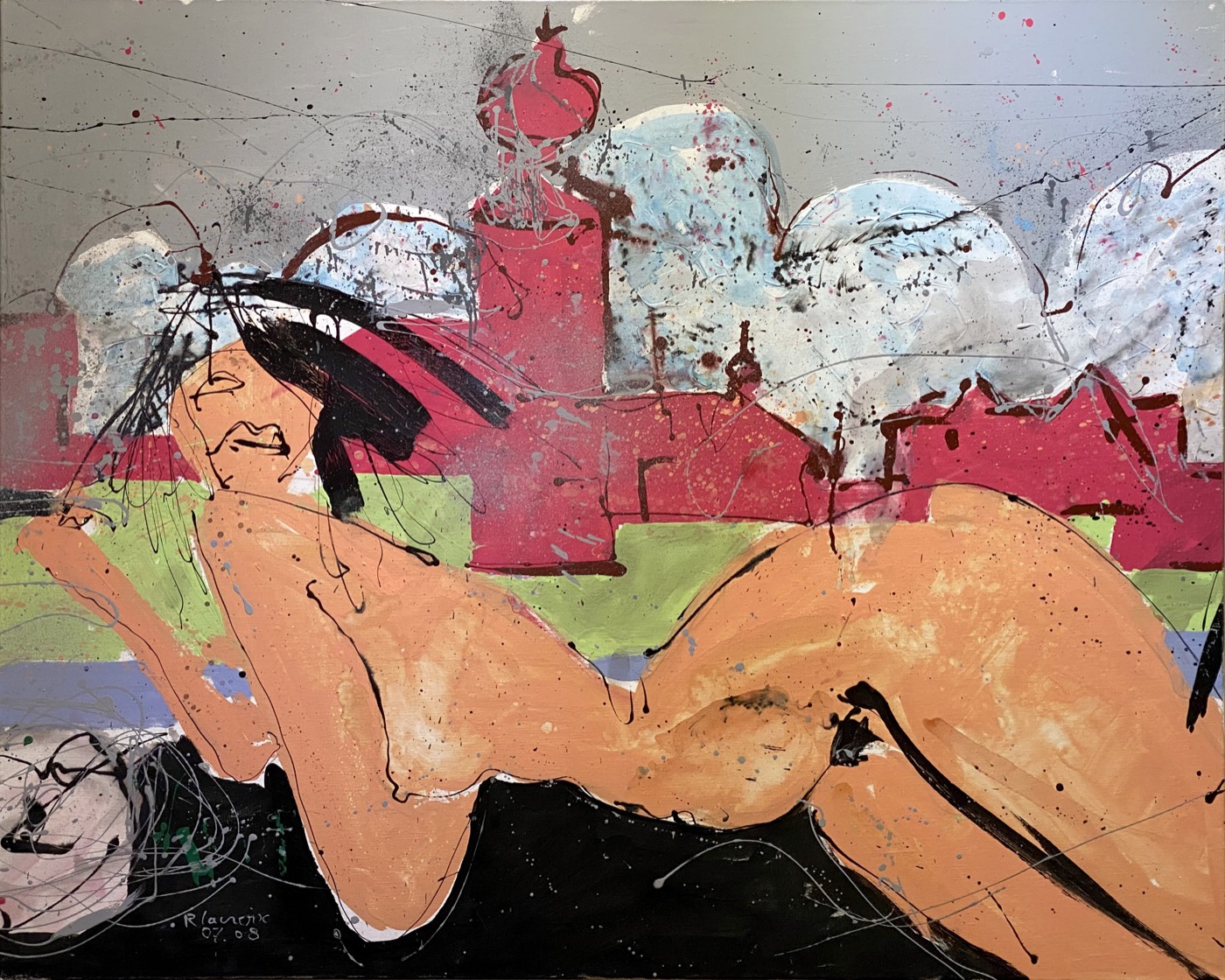
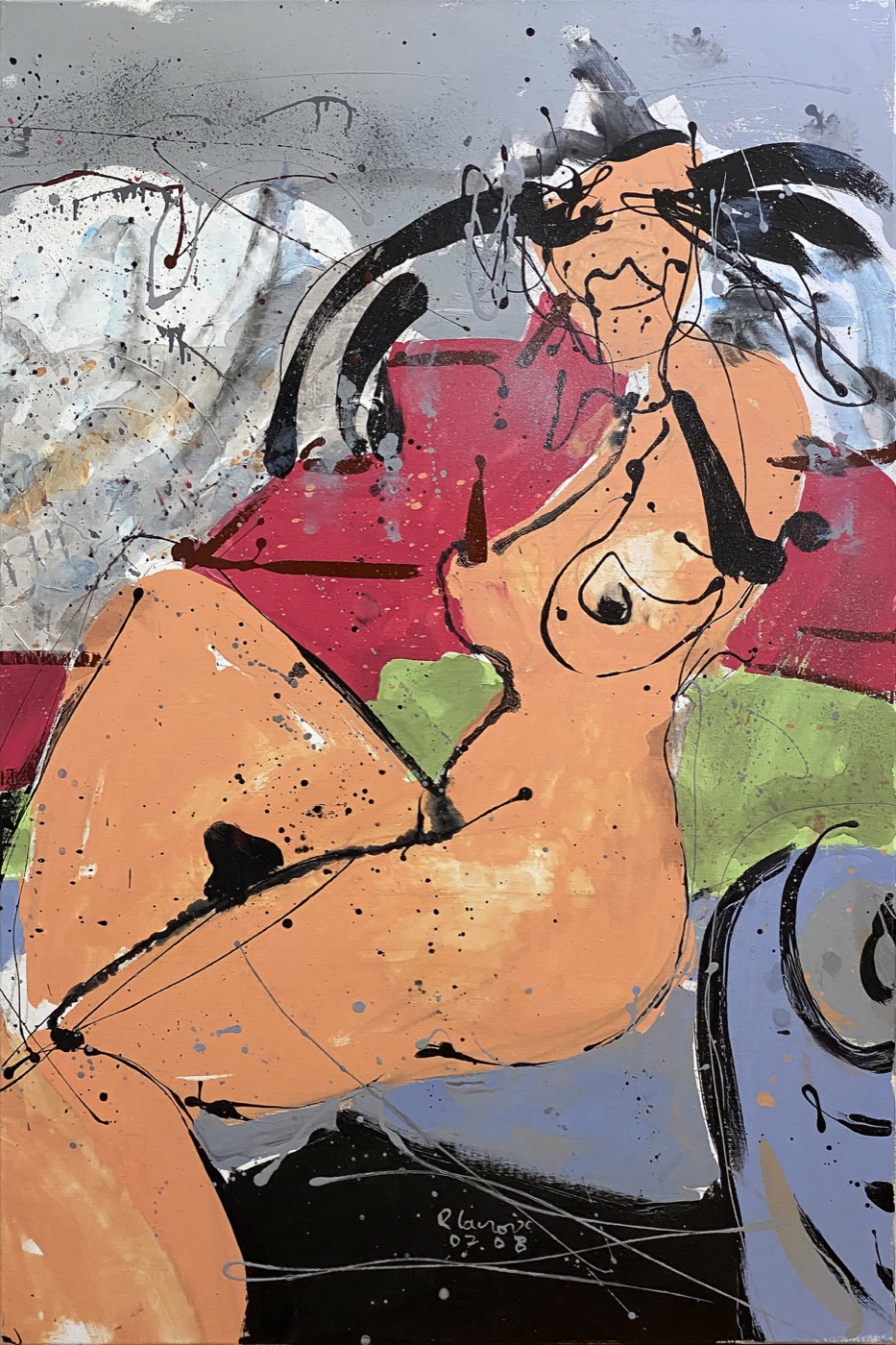
- Figurative – expressionism meets drip painting
An artist because it could not have been otherwise
René Lacroix became an artist because it could not have been any other way. As a child he sketched and painted, but a career as an artist was out of the question. His mother insisted that he train as an architect – even though, more than once, she saved the family’s food budget at the end of the month by selling his watercolours to the neighbours.
Among the projects René worked on as an architect was the prison in Monaco. But even though, as everywhere in Monaco, only the finest marble was used, it could not fulfil his artistic ambitions. He also made the model for the orientation table of the Principality of Monaco (1985). In 1994 he gave up everything to devote himself to his passion: la peinture.
The studio in the church cellar
René was a true Niçois. Through his contacts he was allowed to use a large vaulted cellar beneath an abandoned church in Vieux-Nice – in exchange for clearing it out himself. The cellar became his studio, gallery and home, even though it had no electricity, running water or heating. Whatever he needed and could not afford, he bartered for with his art.
René was uncompromising. He never accepted commissions, and if the owner of an exhibition space found one of his paintings too explicit, he took them all down: c’est tout ou rien.
From Vieux-Nice to the world
The locals in Vieux-Nice rarely bought art, so his market had to be found elsewhere. Through hard work René had his paintings exhibited in Nice, Èze Village and Monaco, and so reached a more international audience. At the Lycée de la Providence in Nice he organised exhibitions of sculptors, photographers and painters – and showed his own work. On 2 June 2001 he opened a new studio at 8 rue Benoît-Bunico in Vieux-Nice: the paintings hung on the ground floor, and he painted in the cellar below. By the late 1990s he was becoming an established name, with exhibitions in Geneva and London – while living uncompromisingly for his art, comme un vrai artiste peintre et bohème.
In the same period René made works for several traditional restaurants in Vieux-Nice. They were not commissions, but works for his friends and for the places he frequented himself. If you are in Nice, you can still see them at Cave de la Tour, Cantina de la Bourse and Bar du Coin. A word of advice: do not arrive looking too much like a tourist – they are very local places.
Rikke – muse and model
In 1999 René met his muse, Rikke. Together with his gallerist on the Promenade des Anglais in Nice, doors began to open outside France. Exhibitions in the United States brought his art wider recognition, and in time his works were shown in several European countries and bought by connoisseurs in many parts of the world.
From the beginning René found his models in the street, and he was proud never to have paid them. After 1999 his subject became far more specific: Rikke – probably above all because she put an end to other models. With very few exceptions his later works are portraits of his muse, ranging from the innocent to the erotic, painted with great love for sa Riquette.
Fox-Amphoux
In 2006 René and Rikke moved to the picturesque village of Fox-Amphoux in the Var department of Provence. René had his studio in an old townhouse, where, with Rikke’s help, he continued to create art in his own style. The village adopted them as its artistic bohemians, and René went on exhibiting both locally and internationally. In August 2006 he moved his studio into the former cooperative hall in Montmeyan and painted in front of visitors, and in June 2008 the old town hall of Fox-Amphoux showed the exhibition “René Lacroix, cinquante ans de peinture”.
The technique
His starting point was drawings in pen or Chinese ink on sketch paper, which René then recreated with glycerol paint on canvas – in fact bathroom paint, which is both glossy and hard-wearing. At first the choice was driven by economics. Like many artists, René had a “red period” – his was sponsored by a building-supplies merchant left with a large surplus of paint.
The material turned out to suit his technique perfectly: the canvas laid flat on the floor and the paint applied in soft, flowing movements. His style is best described as figurative, where expressionism meets drip painting.
Books and collaborations
René illustrated collections of poetry by French writers: Alain Lefeuvre’s Rien ne vaut la peau (2002) – fifty poems with screen prints by René, in an edition of 110 numbered copies – and Victor Varjac’s L’Homme imaginaire (2003), with a dozen original drawings and two hand-coloured screen prints. He also illustrated Varjac’s trilogy Le Périlleux voyage.
From 2006 René painted together with the Danish painter John Hansen. They called the results “peintures à quatre mains” – four-handed paintings – and exhibited them in Fox-Amphoux in 2009 and at Galleri Dahl in Denmark in 2011.
The works today
René Lacroix died in Draguignan on 12 April 2011 after a short illness; his funeral was held in Nice. He left paintings on canvas, ink drawings on paper and illustrations for poems by French writers such as Alain Lefeuvre and Victor Varjac. His works are held in private collections in Europe, the United States, Canada and Australia.
Today Det Private Galleri in Odense, Denmark, represents his widow and handles the sale of the remaining works. If you would like a private viewing, you are welcome to contact the gallery.
“We met René when we moved to the Côte d’Azur in 1999. His muse, Rikke, was the sister of a friend of ours in Denmark. When we opened our gallery in Nice, it was natural that René should become one of our permanent artists. Our very first sale from the gallery on the Promenade des Anglais was one of his paintings – followed by many, many more, shipped all over Europe, the United States, Canada and Australia. When René passed away, his widow asked us to take over his archive and the remaining works, which are now kept in Denmark. Whenever a sale is made, the proceeds are shared with her.”
– Det Private Galleri
Selected exhibitions
- 1998Lycée de la Providence, Nice, France
- 2000Èze Village and Vieux-Nice, France
- 2001Atelier Lacroix, rue Benoît-Bunico, Vieux-Nice, France
- 2002Max Galerie d’Art, Promenade des Anglais, Nice, France
- 2002Galerie des Arts, Sarasota, Florida, USA
- 2003Max Galerie d’Art, Promenade des Anglais, Nice, France
- 2004Galleri Cobra, Charlottenlund, Denmark
- 2006Galerie Epsilon, Paris, France
- 2006Ancienne coopérative, Montmeyan, Var, France
- 2008“Cinquante ans de peinture”, L’Ancienne Mairie, Fox-Amphoux, Var, France
- 2008Galerie des Augustins, Avignon, France
- 2008Næsseslottet, Holte, Denmark
- 2008Mairie d’Aups, Var, France
- 2009Galerie des Augustins, Avignon (with Marie-Claude Debain), France
- 2009L’Ancienne Mairie, Fox-Amphoux, Var (with John Hansen), France
- 2009Galerie Lærken, Nykøbing Falster, Denmark
- 2010Galleri Rasmus, Odense, Denmark
- 2011Galleri Dahl, Havndal (with John Hansen), Denmark
Also, among others, the Biennale méditerranéenne in Nice, the Palais de l’Europe in Menton and exhibitions in Monaco, Saint-Paul, Cotignac, Aix, Moissac-Bellevue, Geneva and London.
Press and posters
Newspaper clippings, flyers and posters from 1998 to 2011 – mostly from French newspapers. Click to see them full size.
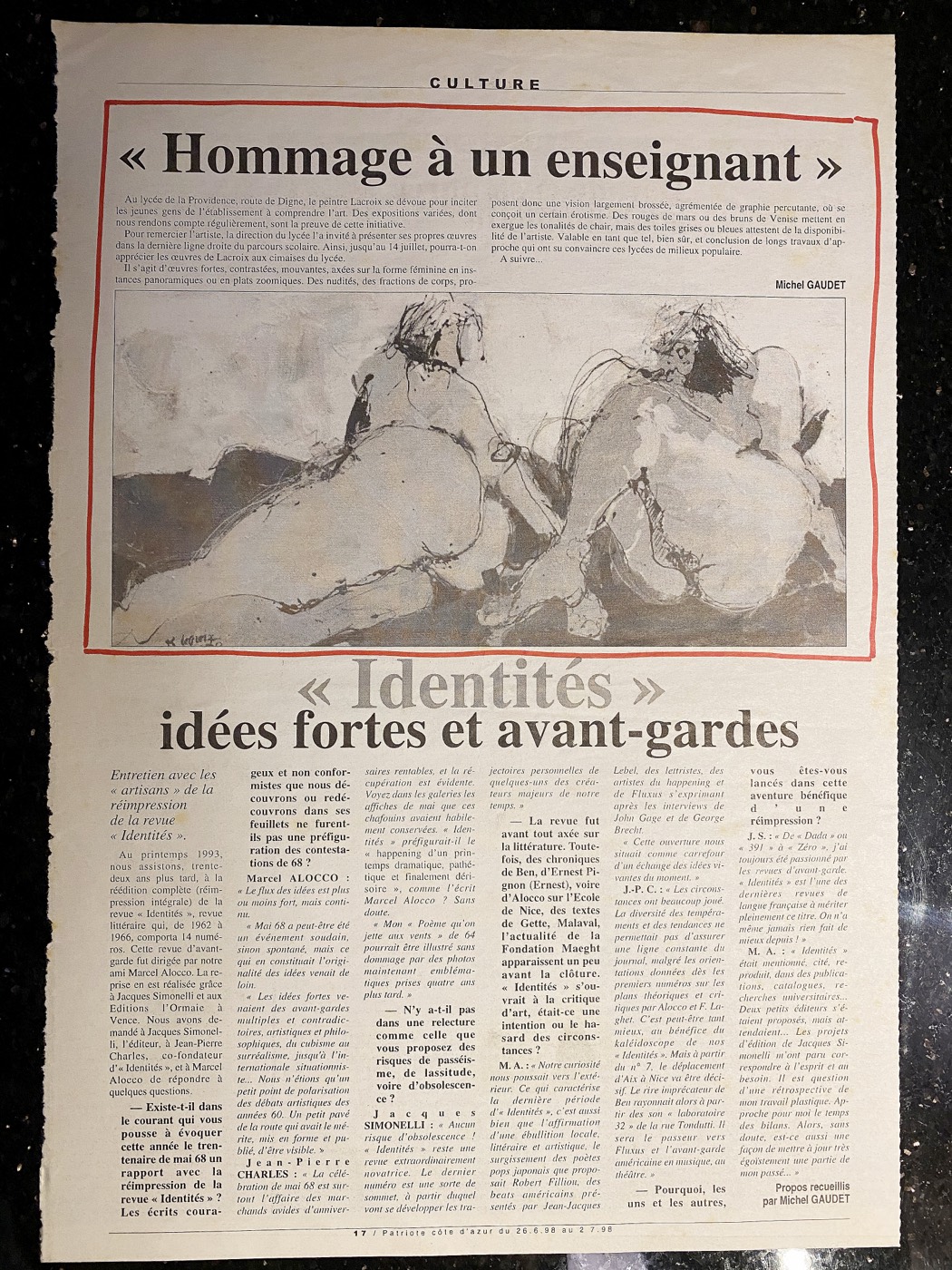 1998 · Lycée Providence – Le Patriote Côte d’Azur
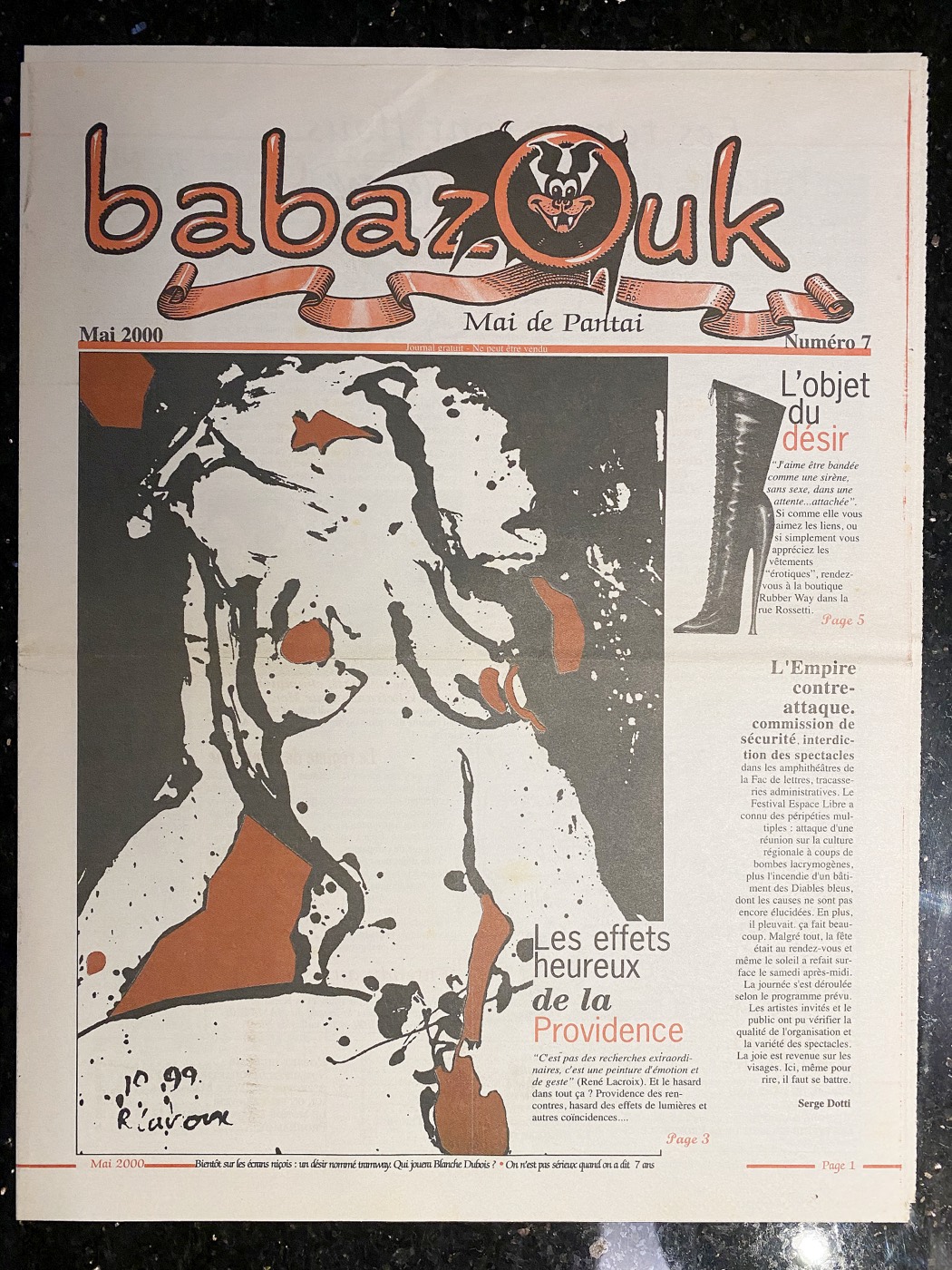 2000 · Nice – Babazouk
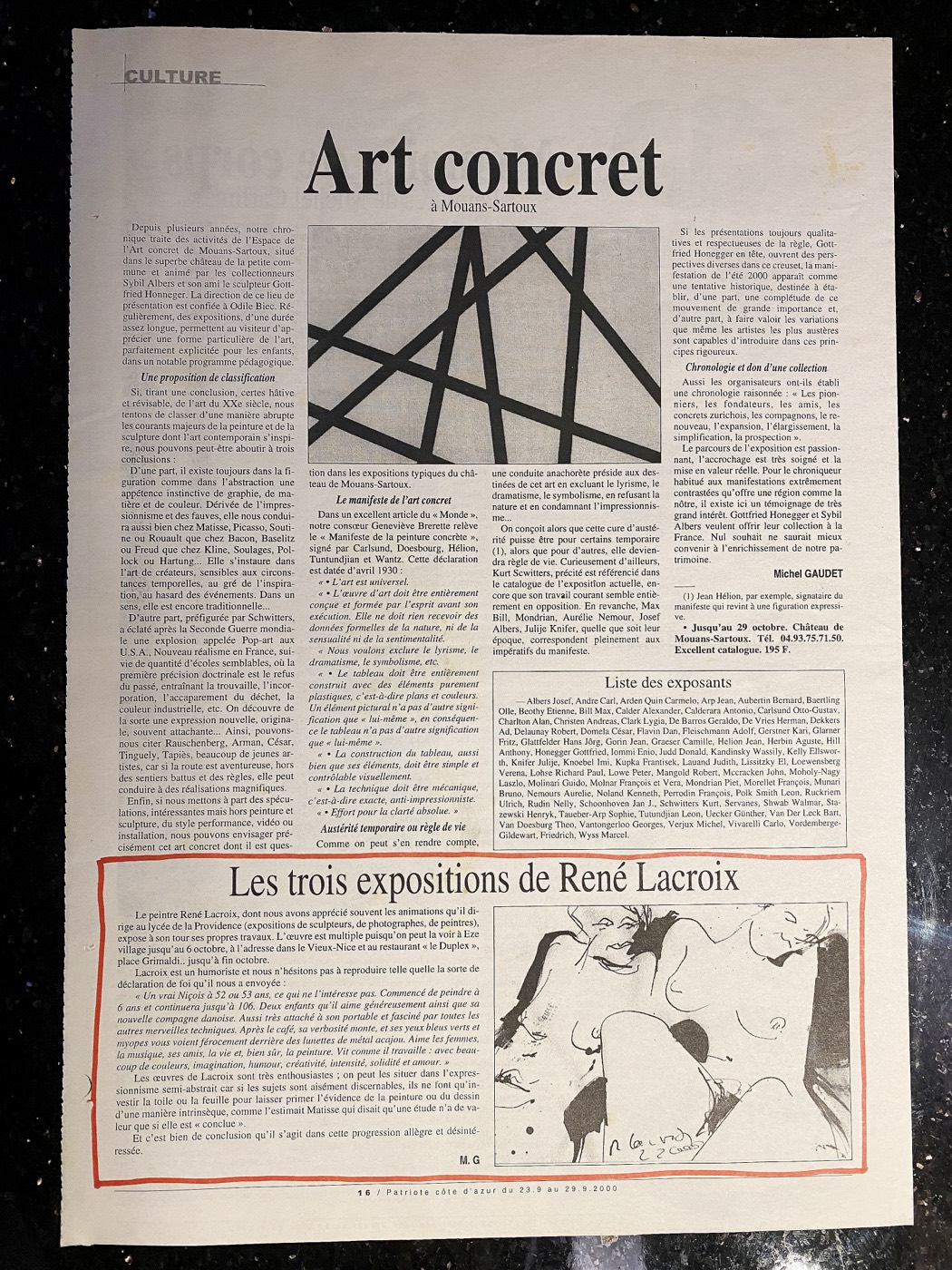 2000 · Èze Village – Le Patriote Côte d’Azur
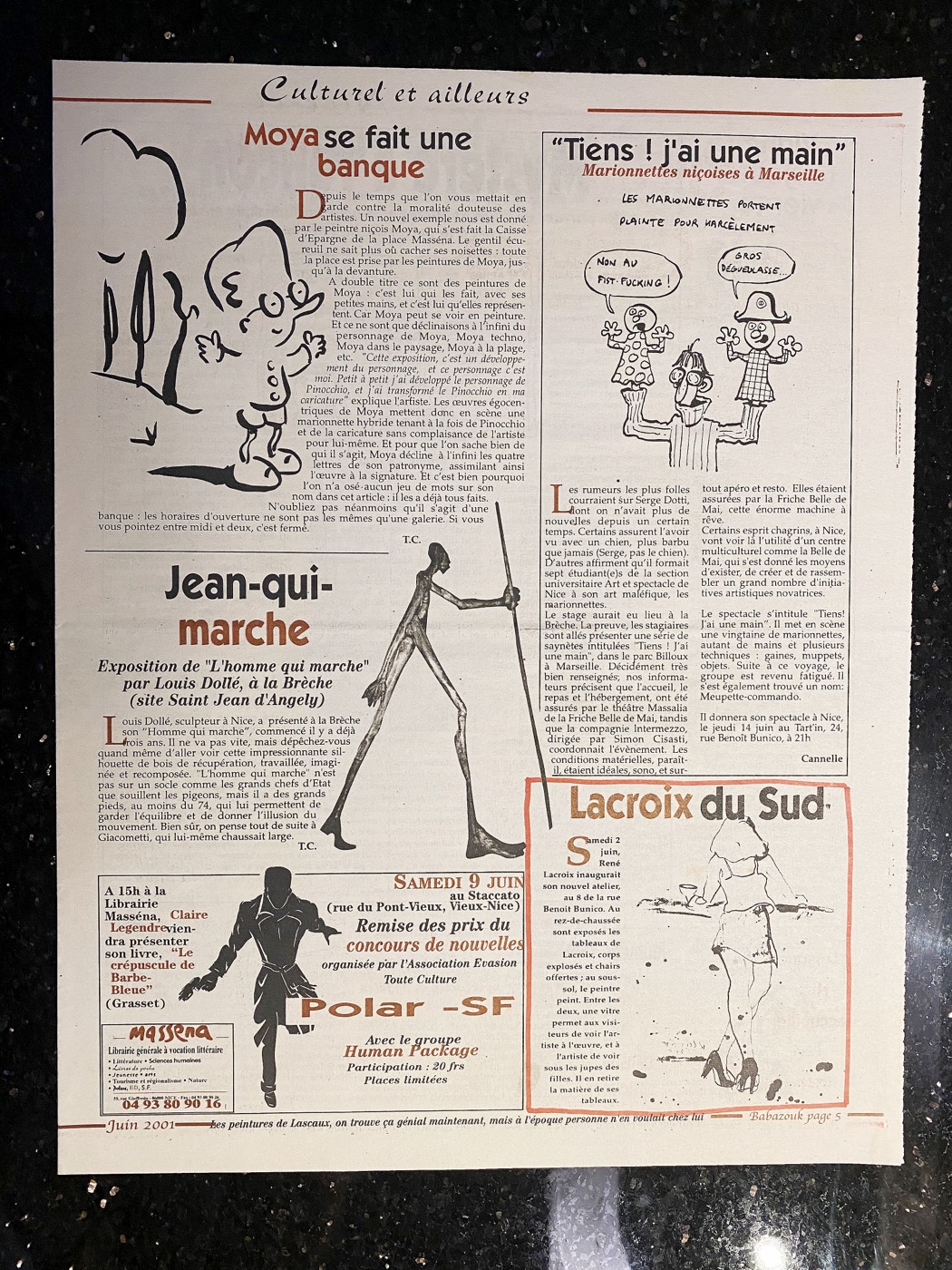 2001 · Atelier Vieux-Nice – Babazouk
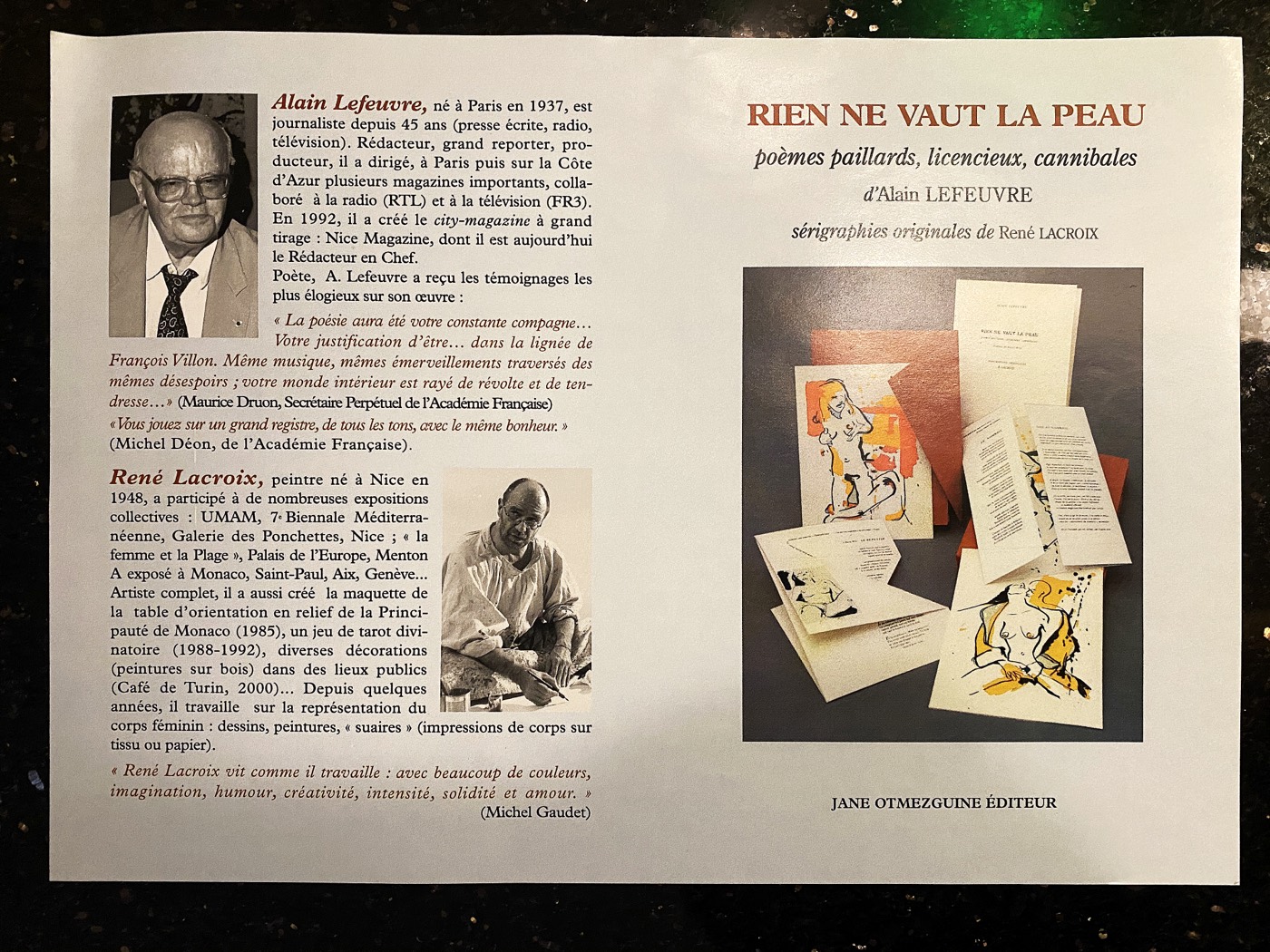 2002 · Alain Lefeuvre – flyer
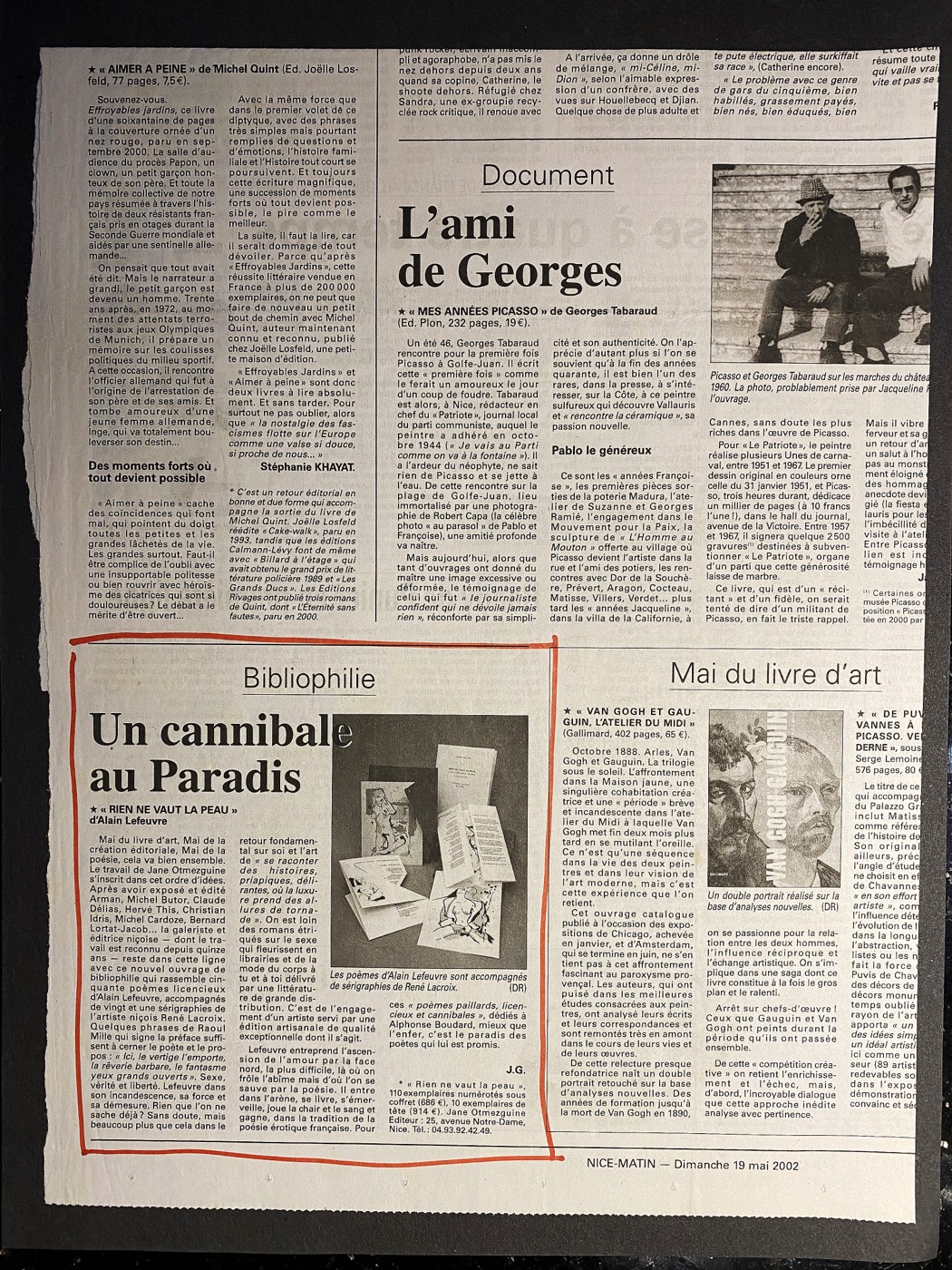 2002 · Alain Lefeuvre – Nice-Matin
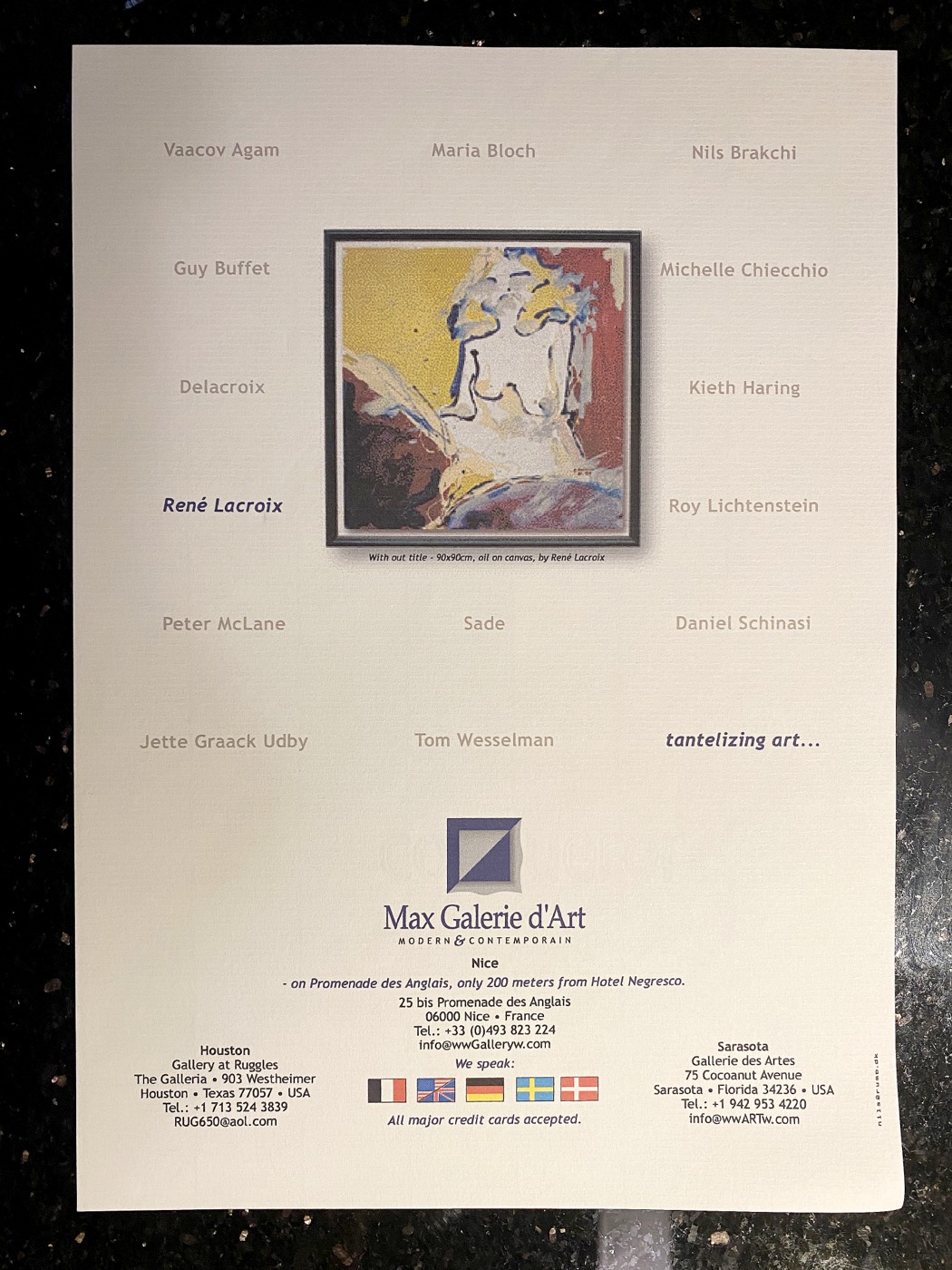 2002 · Max Galerie d’Art
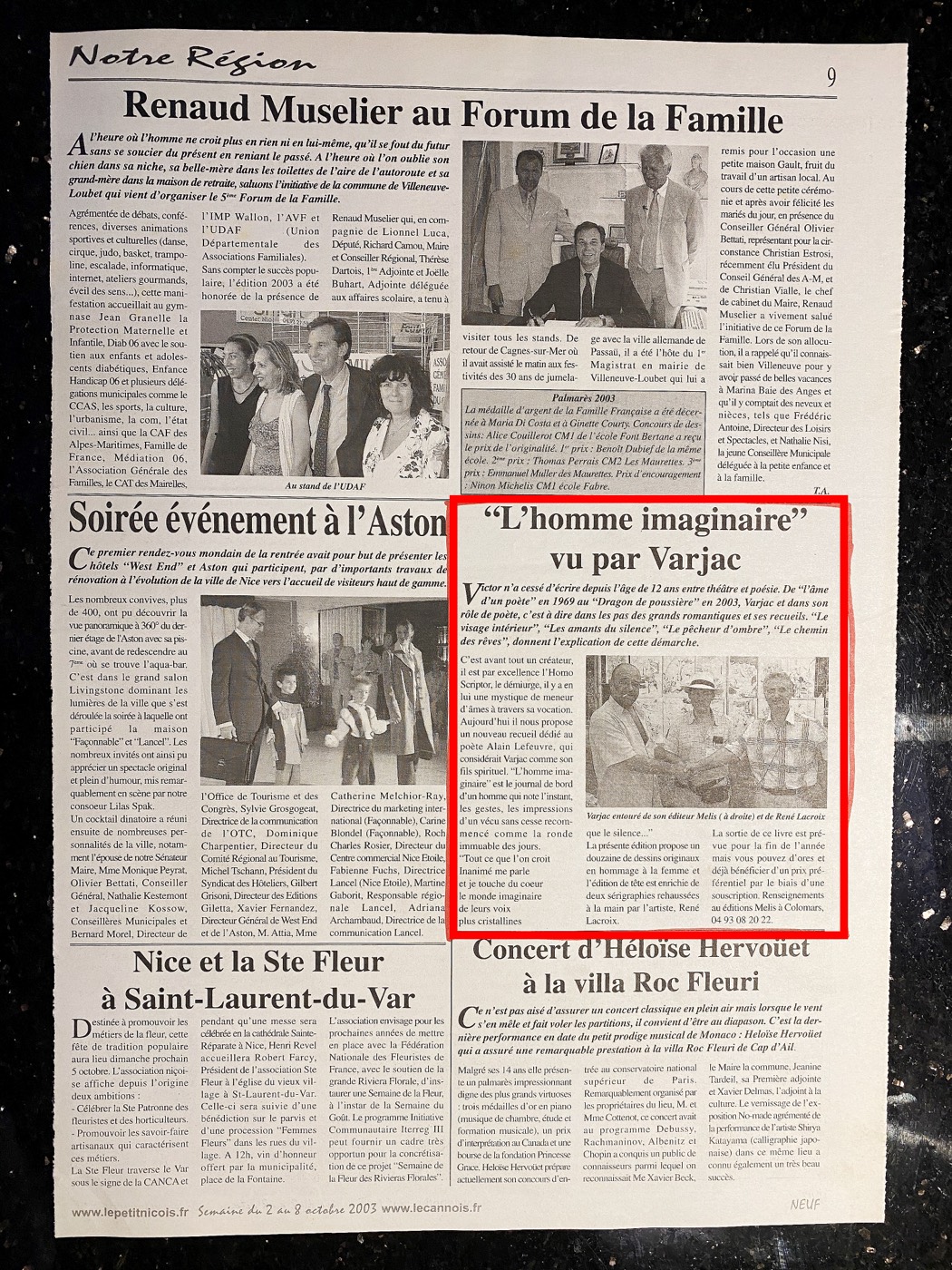 2003 · Victor Varjac – Le Petit Niçois
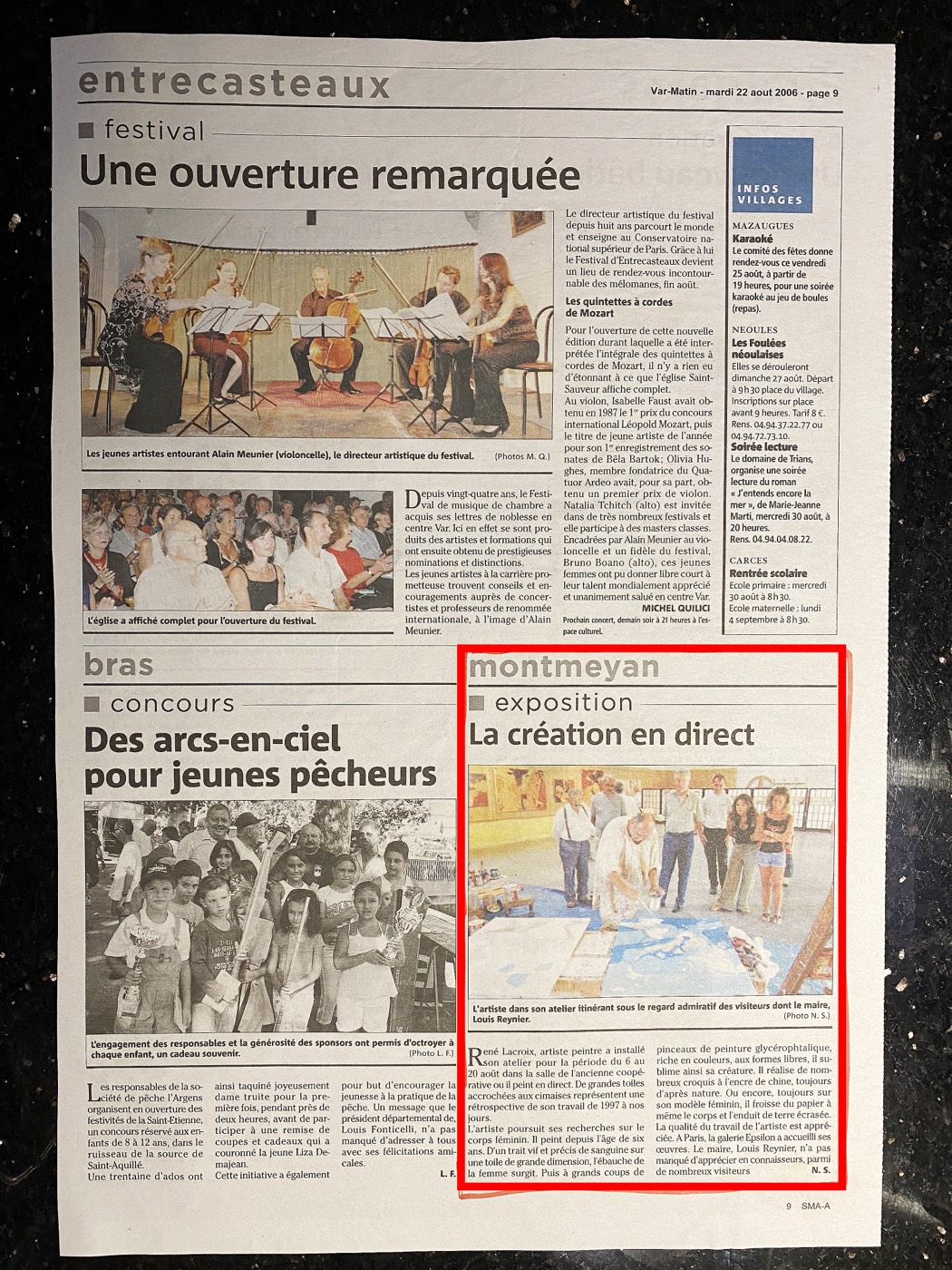 2006 · Montmeyan – Var-Matin
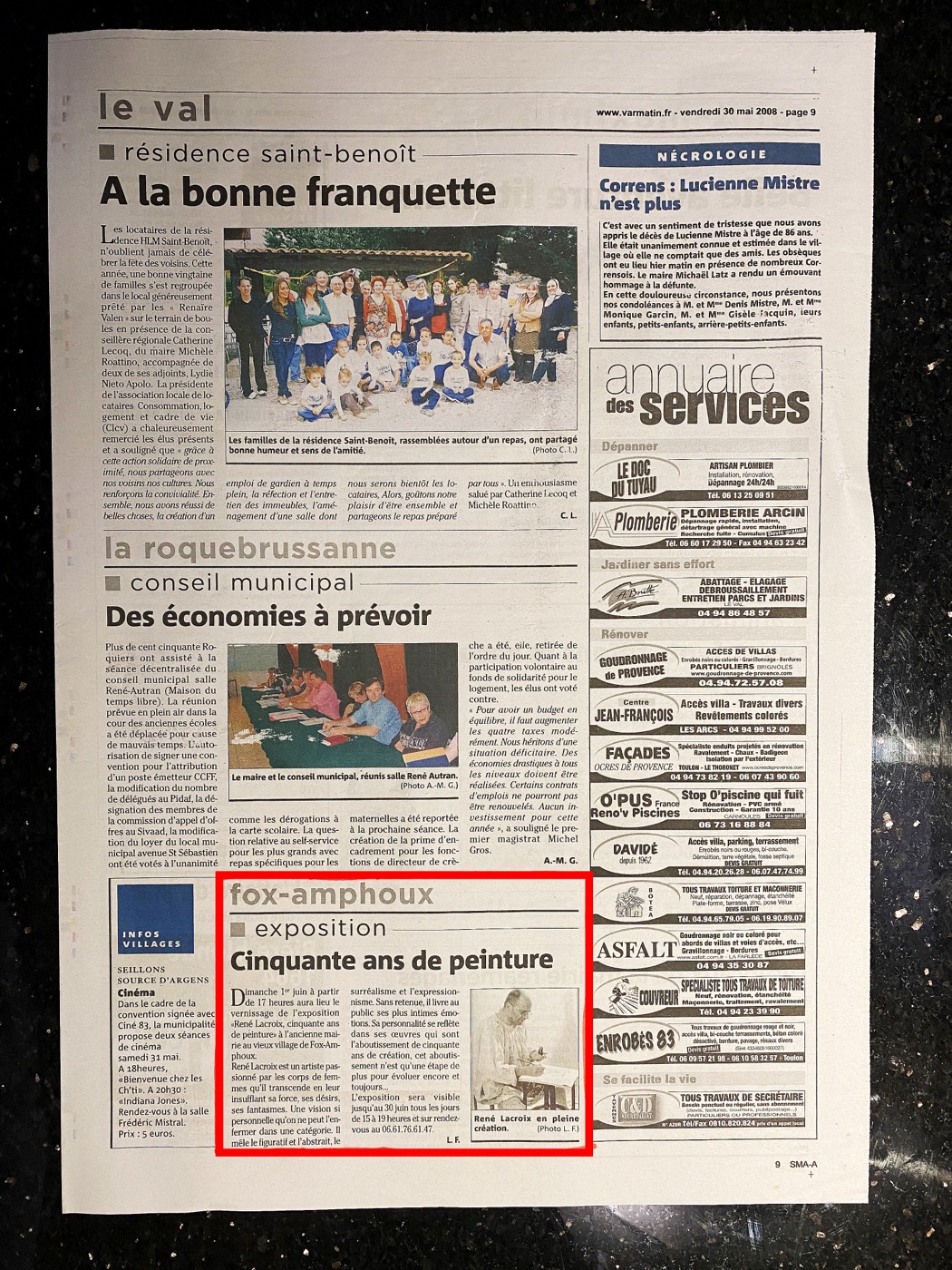 2008 · Fox-Amphoux – Var-Matin
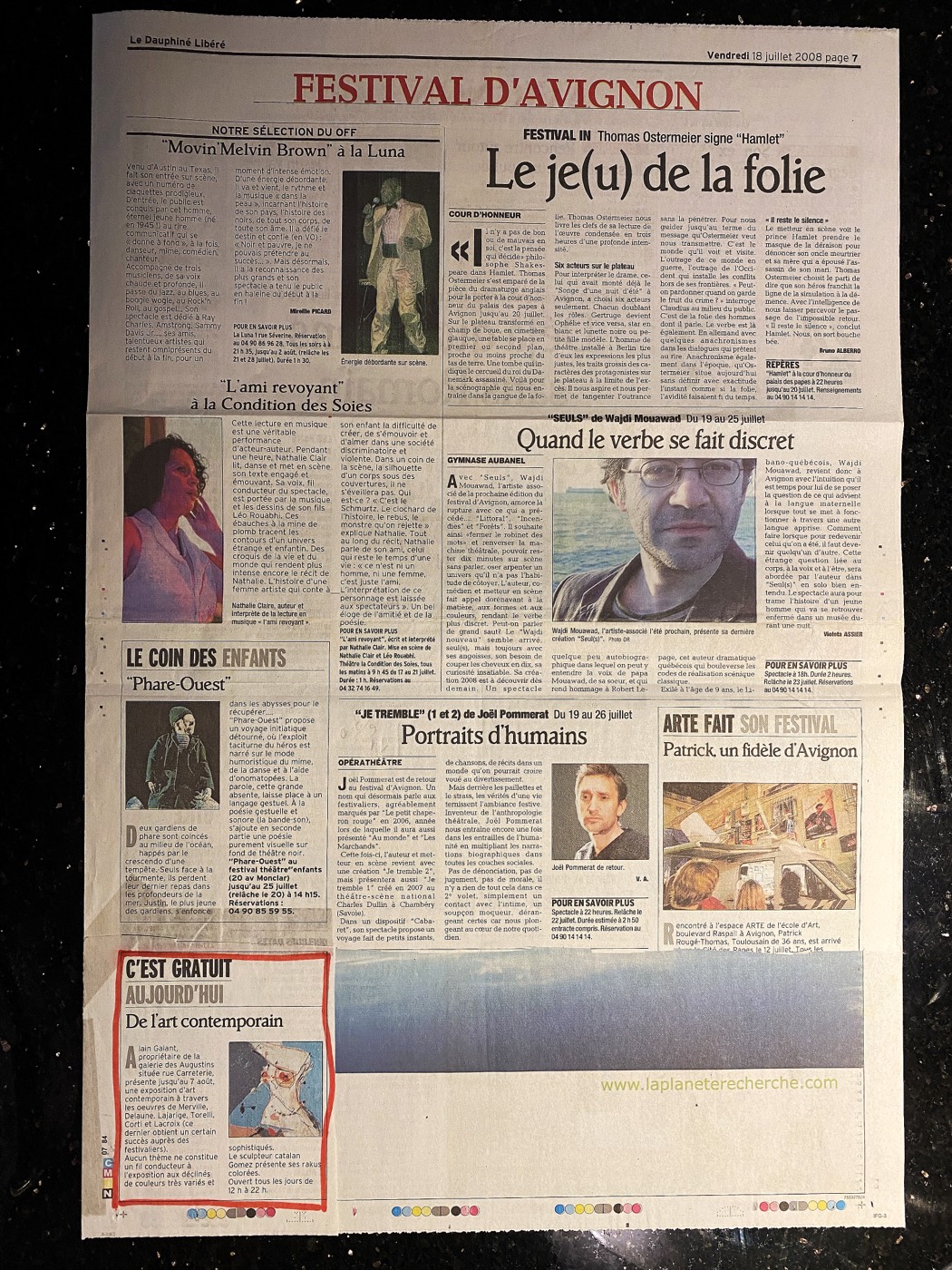 2008 · Galerie des Augustins – Le Dauphiné Libéré
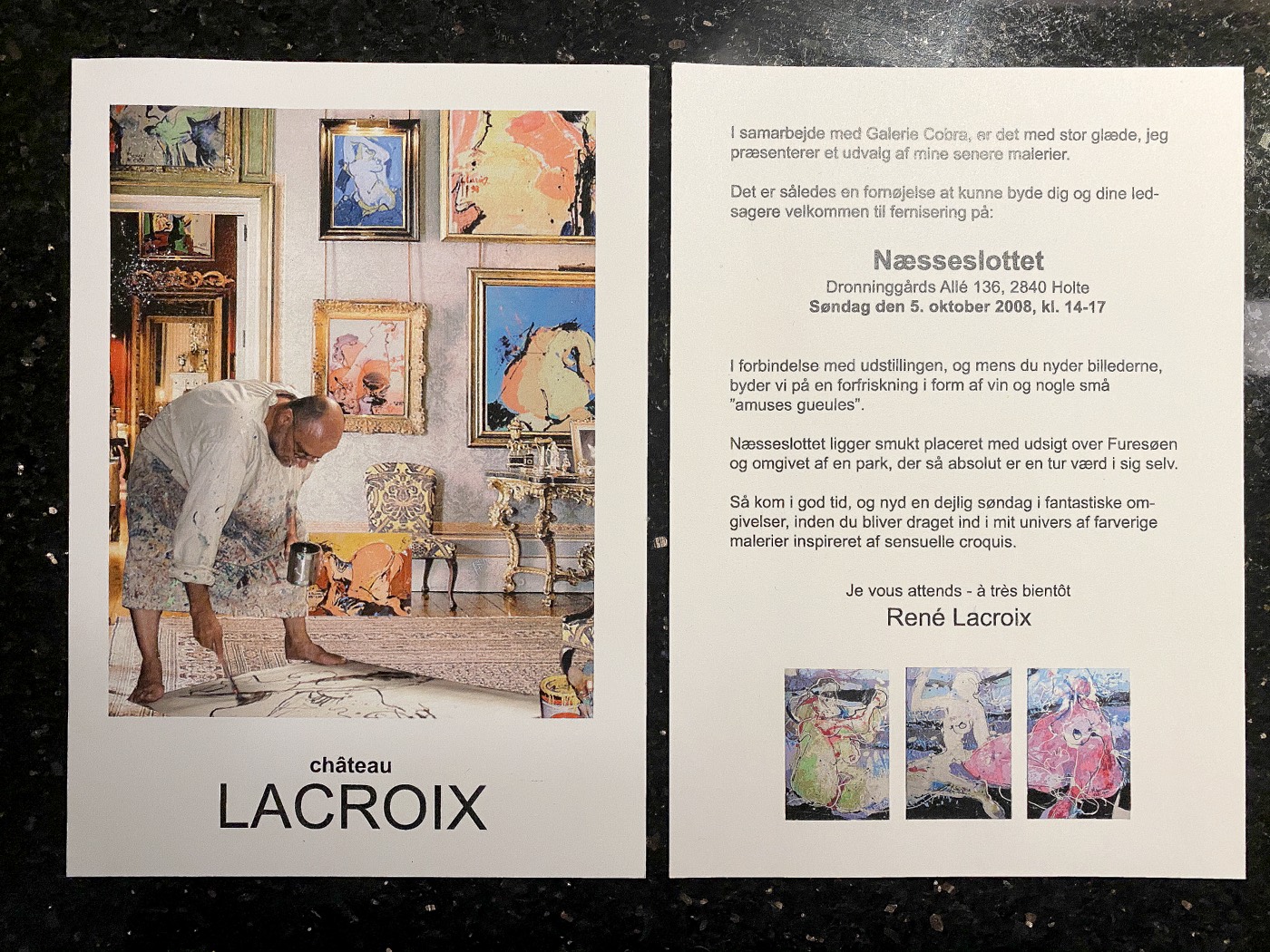 2008 · Næsseslottet – flyer
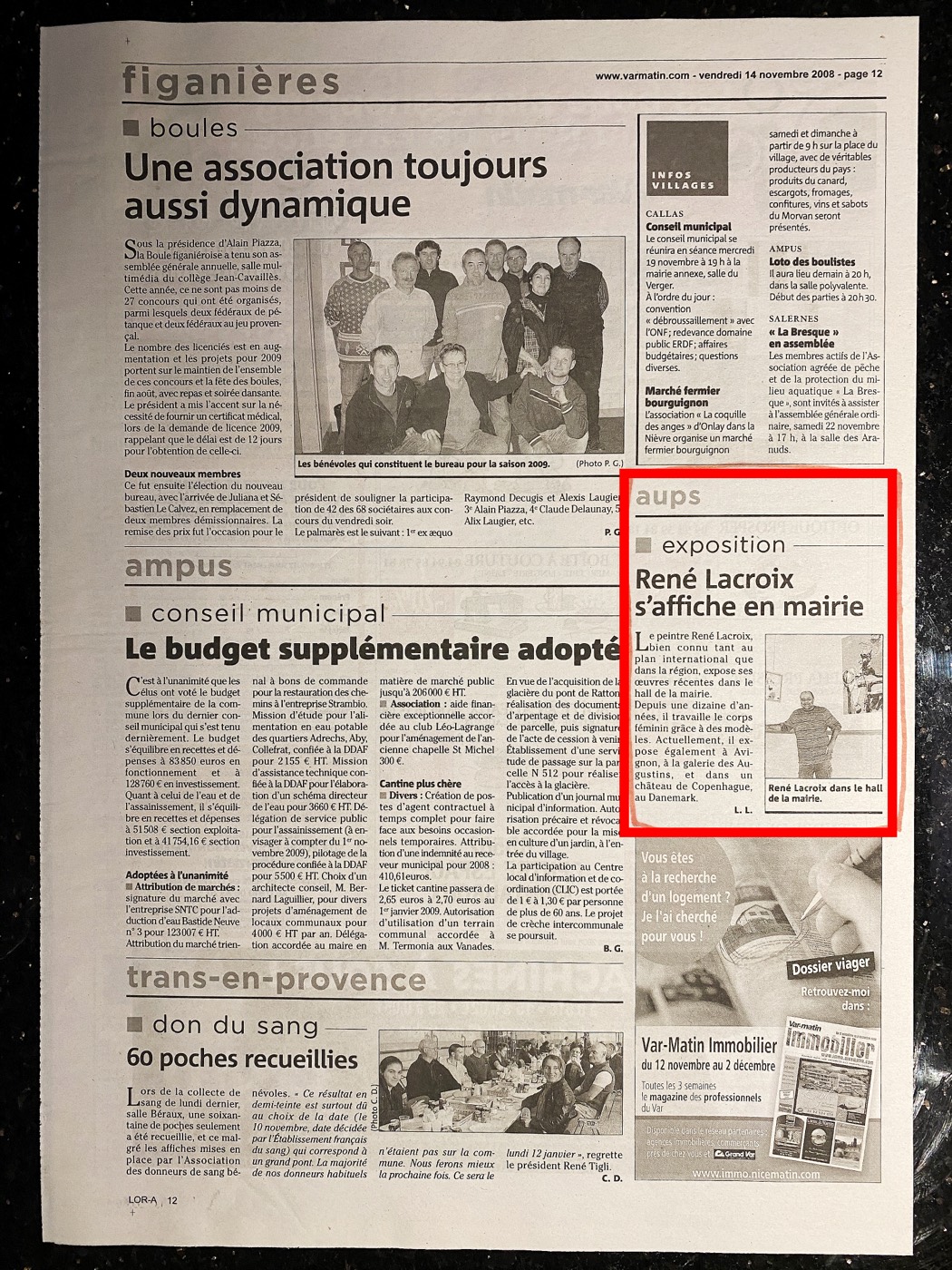 2008 · Aups – Var-Matin
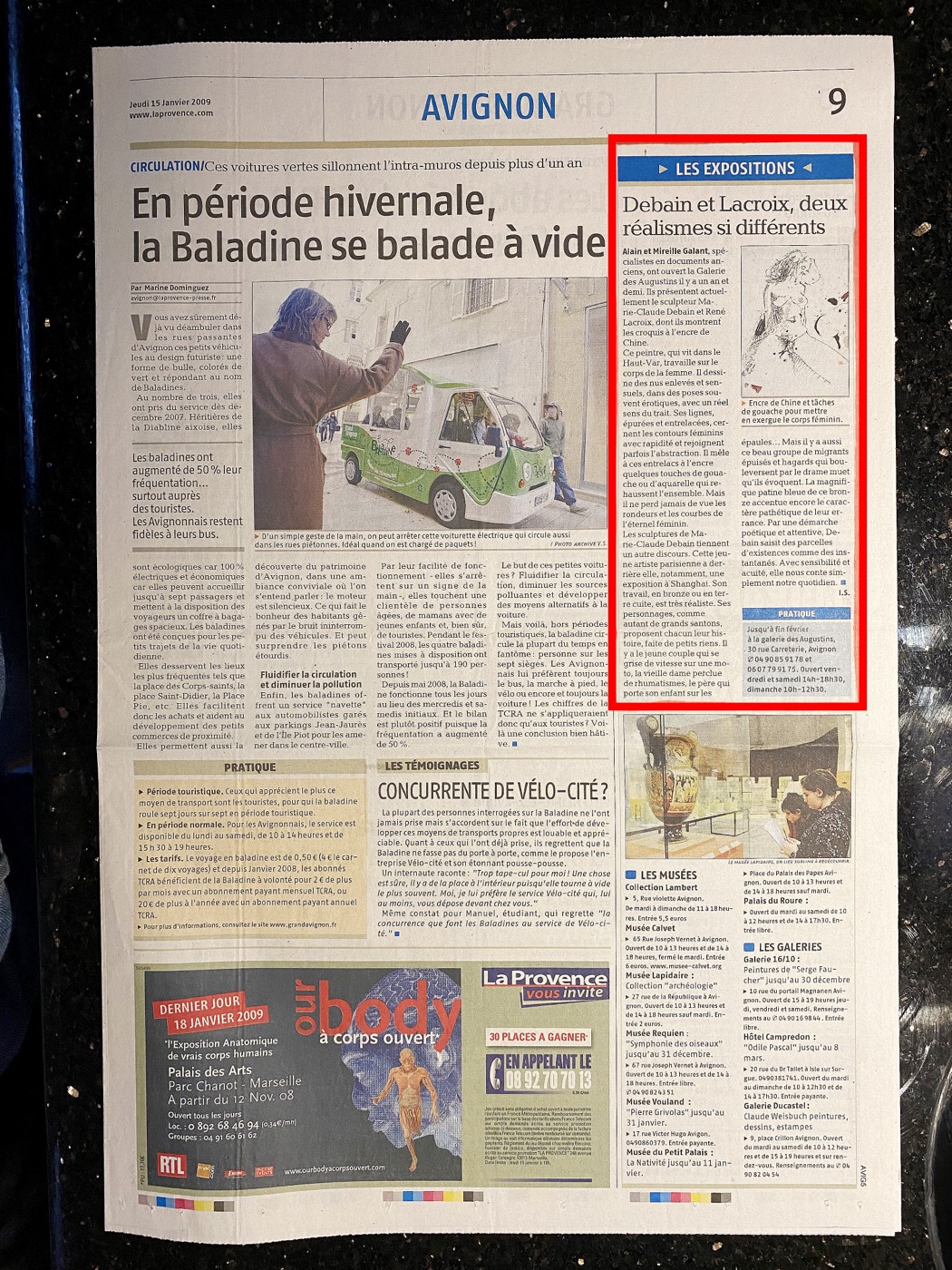 2009 · Galerie des Augustins – La Provence
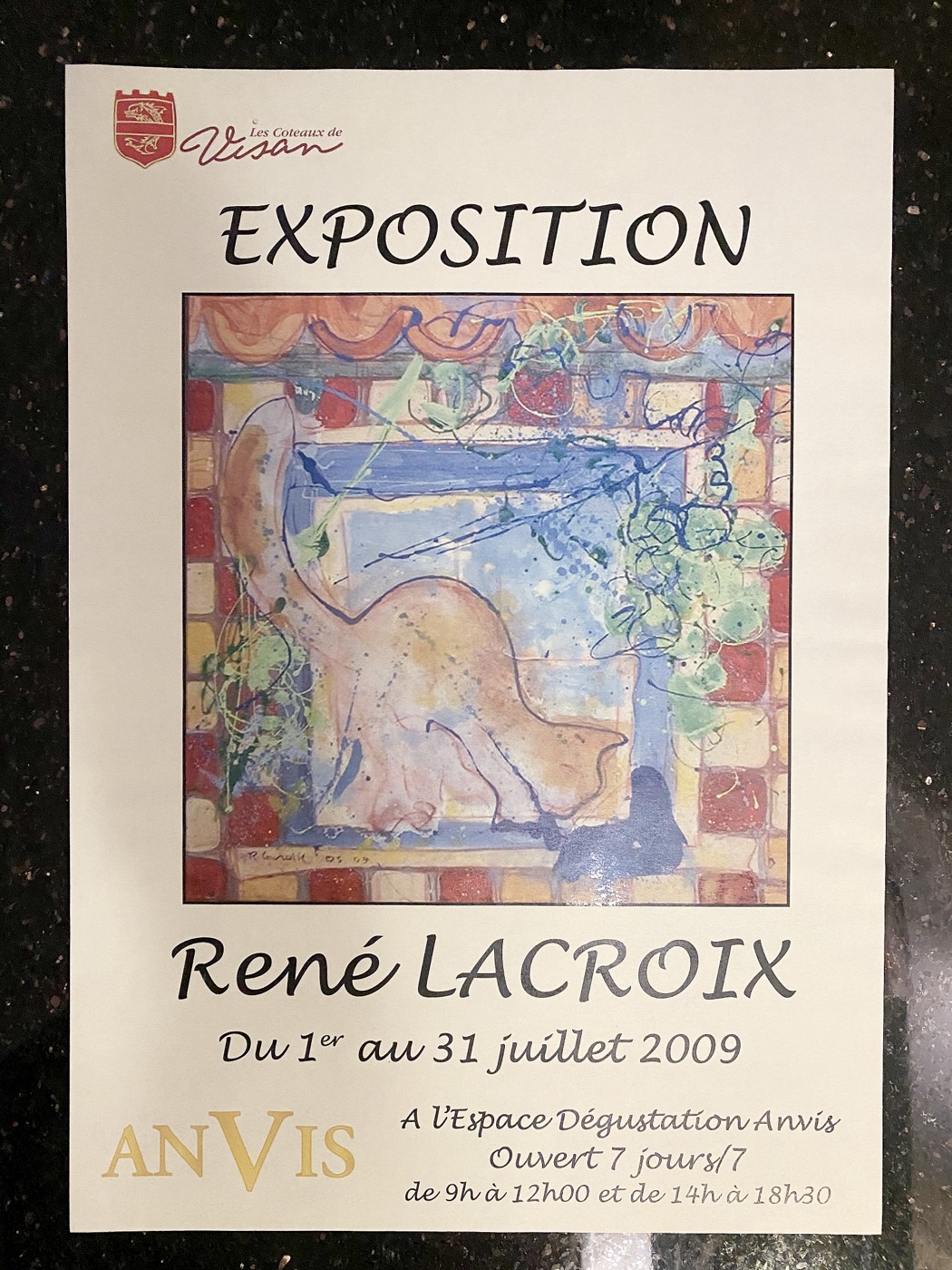 2009 · Coteaux de Visan
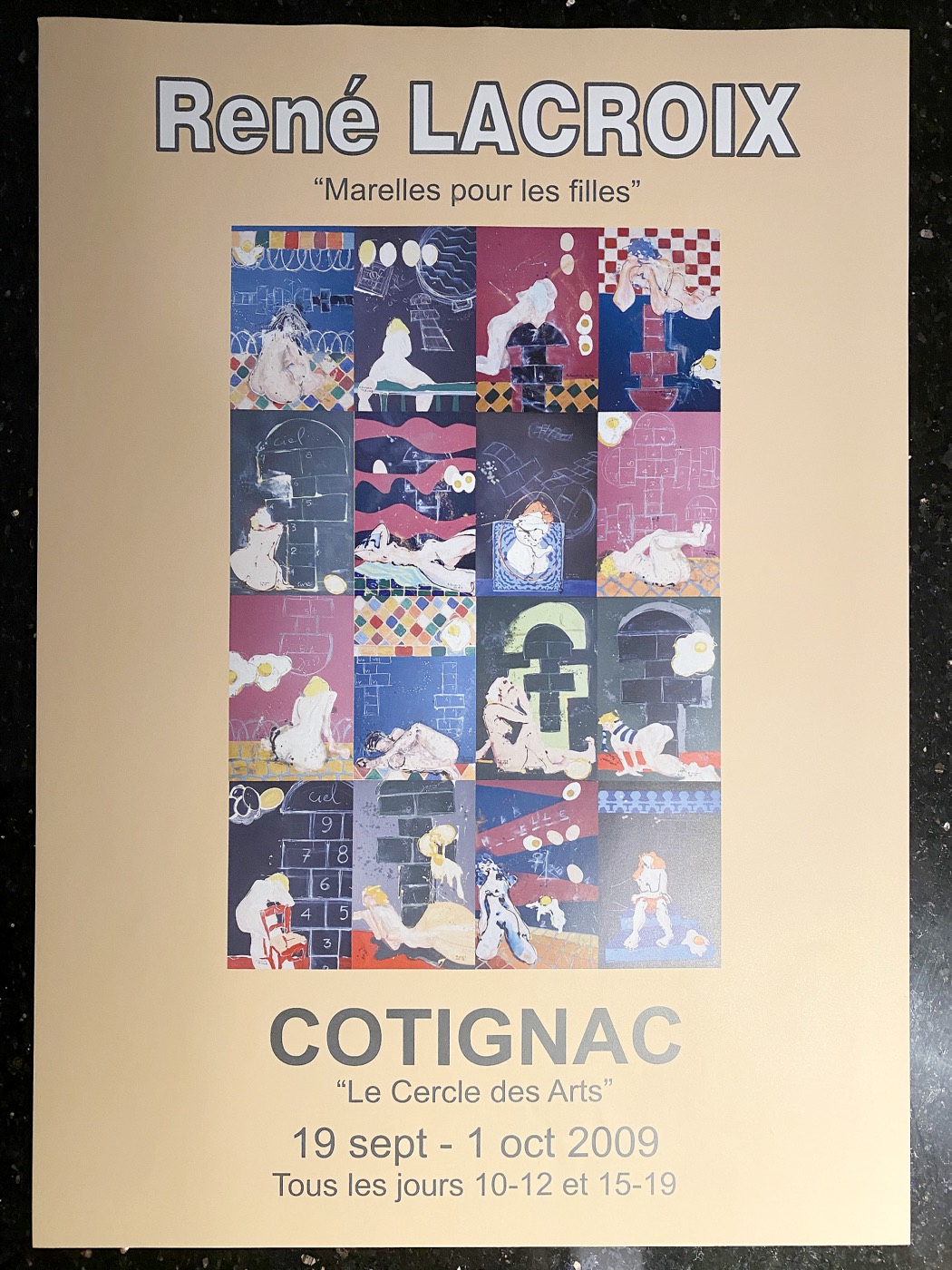 2009 · Cotignac
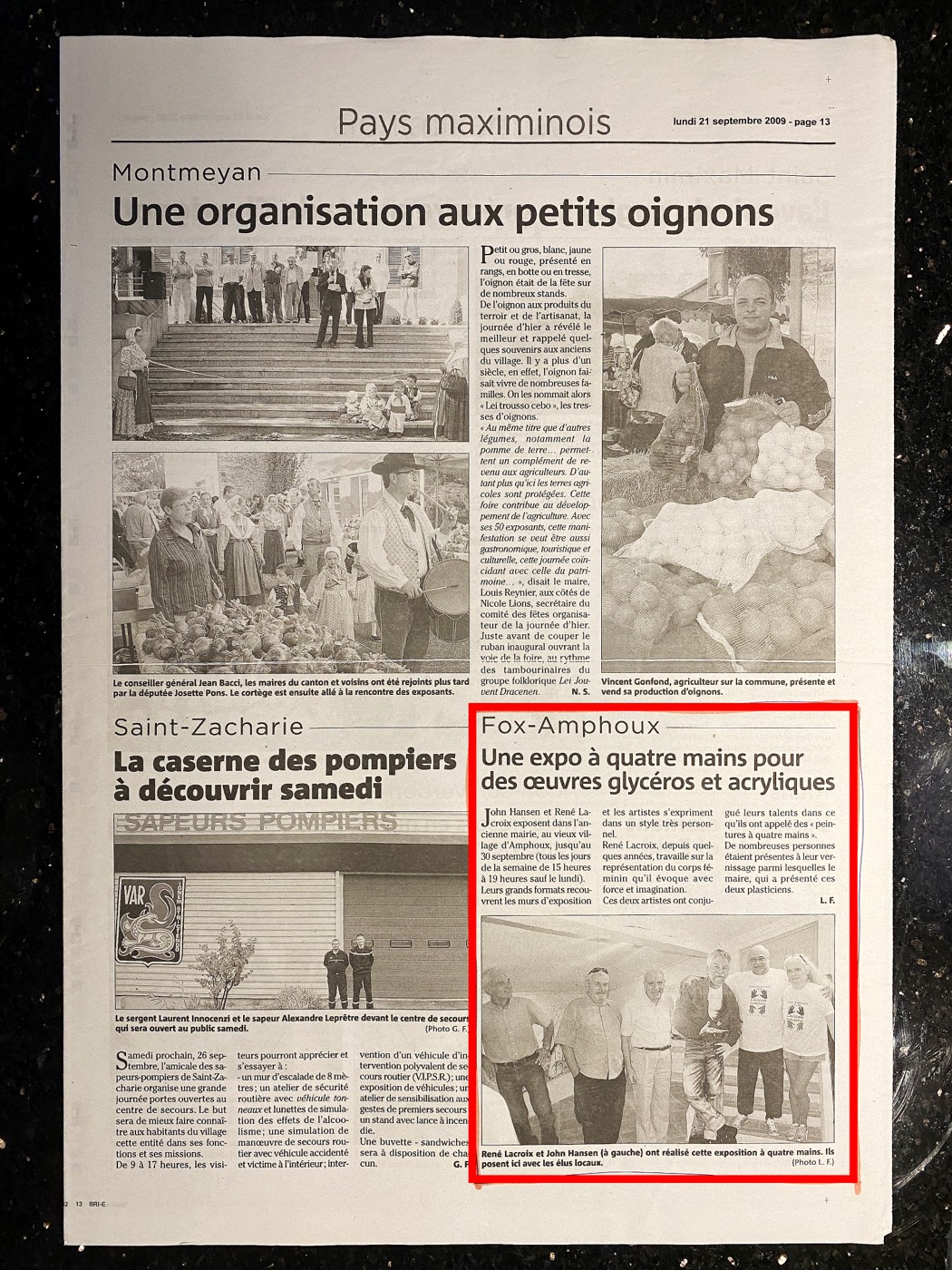 2009 · John Hansen – Var-Matin
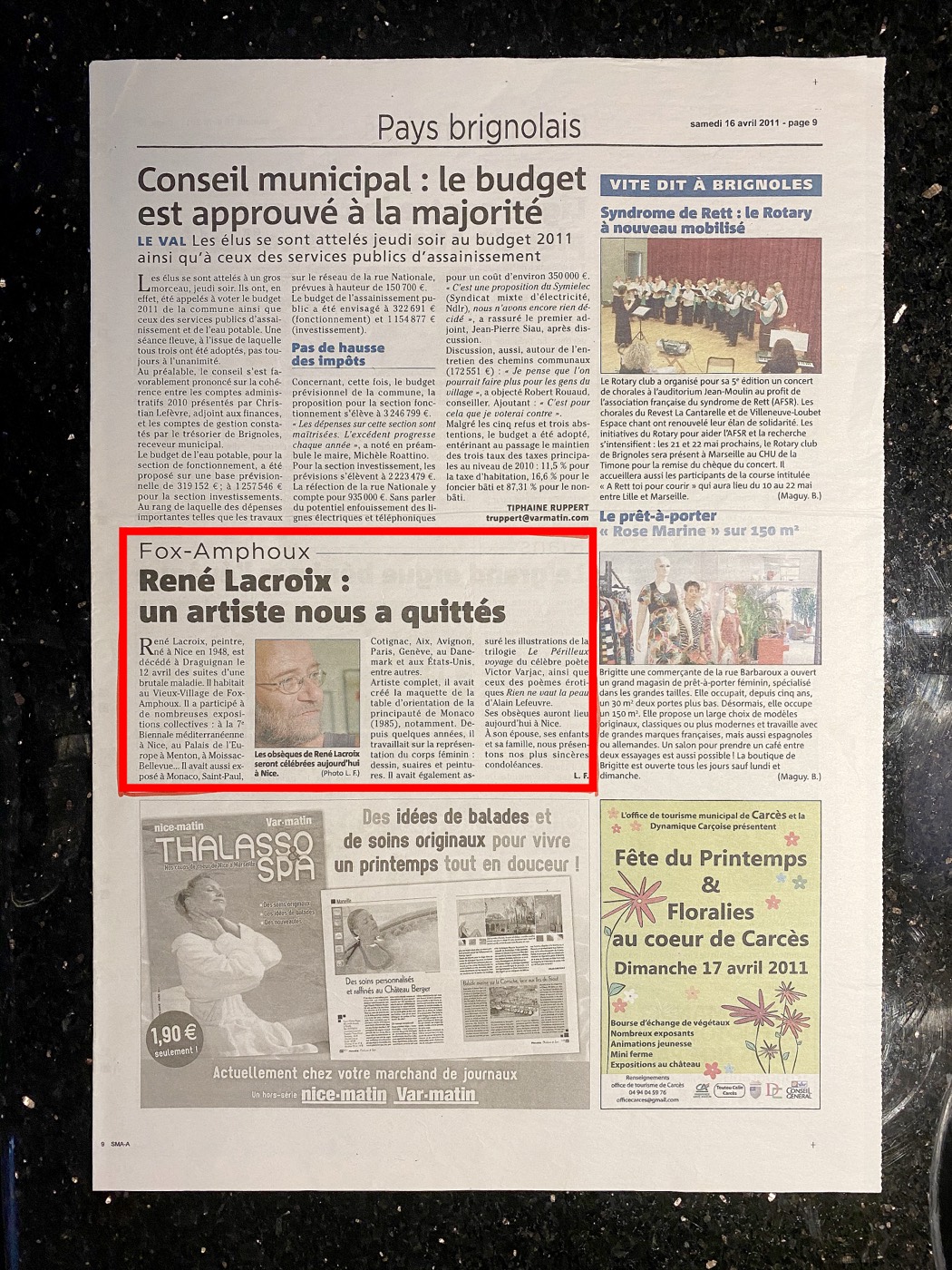 2011 · Var-Matin
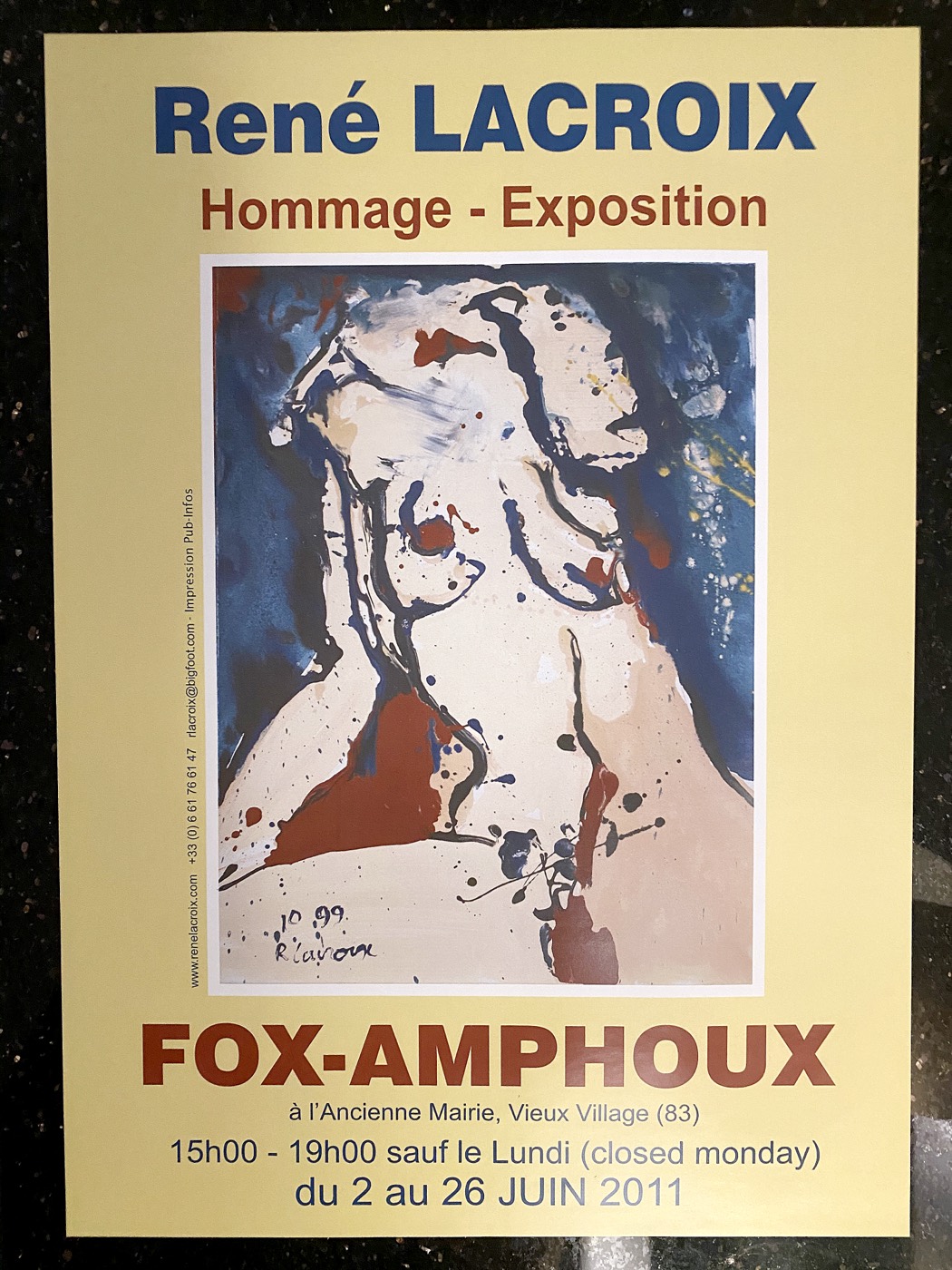 2011 · Fox-Amphoux
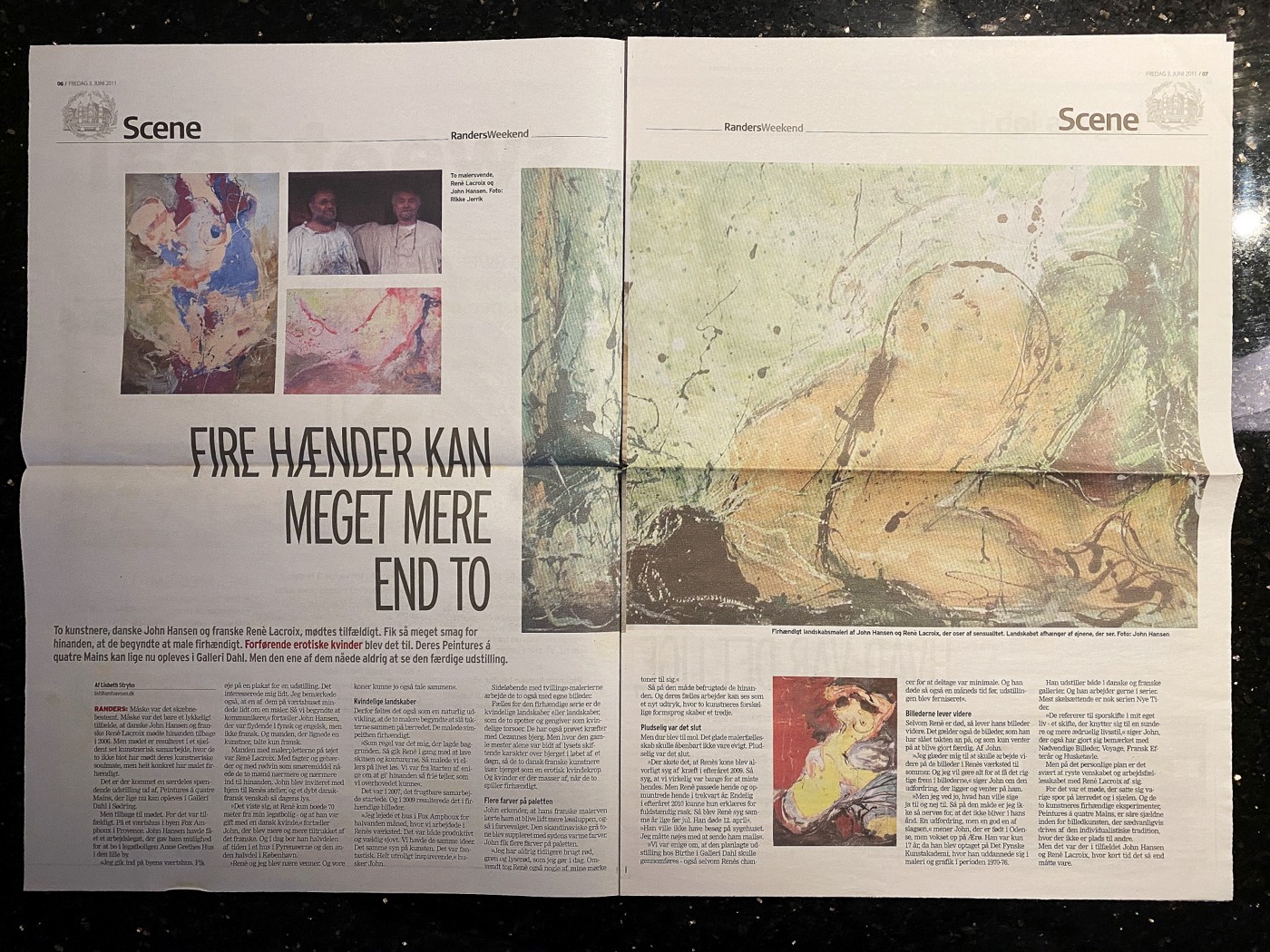 2011 · Galleri Dahl – Randers Weekend